

AllEventOne
Event Planning & Engagement Platform
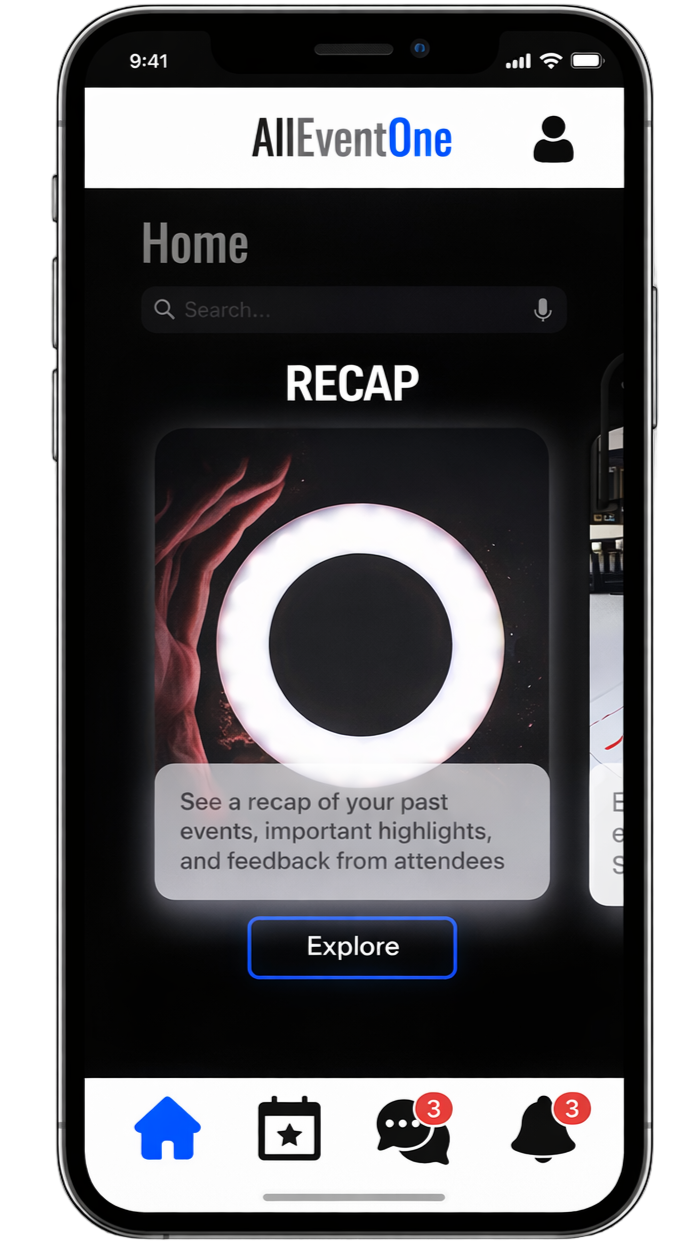
Designed a mobile platform to streamline event registration, attendance tracking, and post-event engagement—reducing manual coordination and improving operational efficiency for event planners.
UX Design • Product Thinking • System Design • Research
The Problem
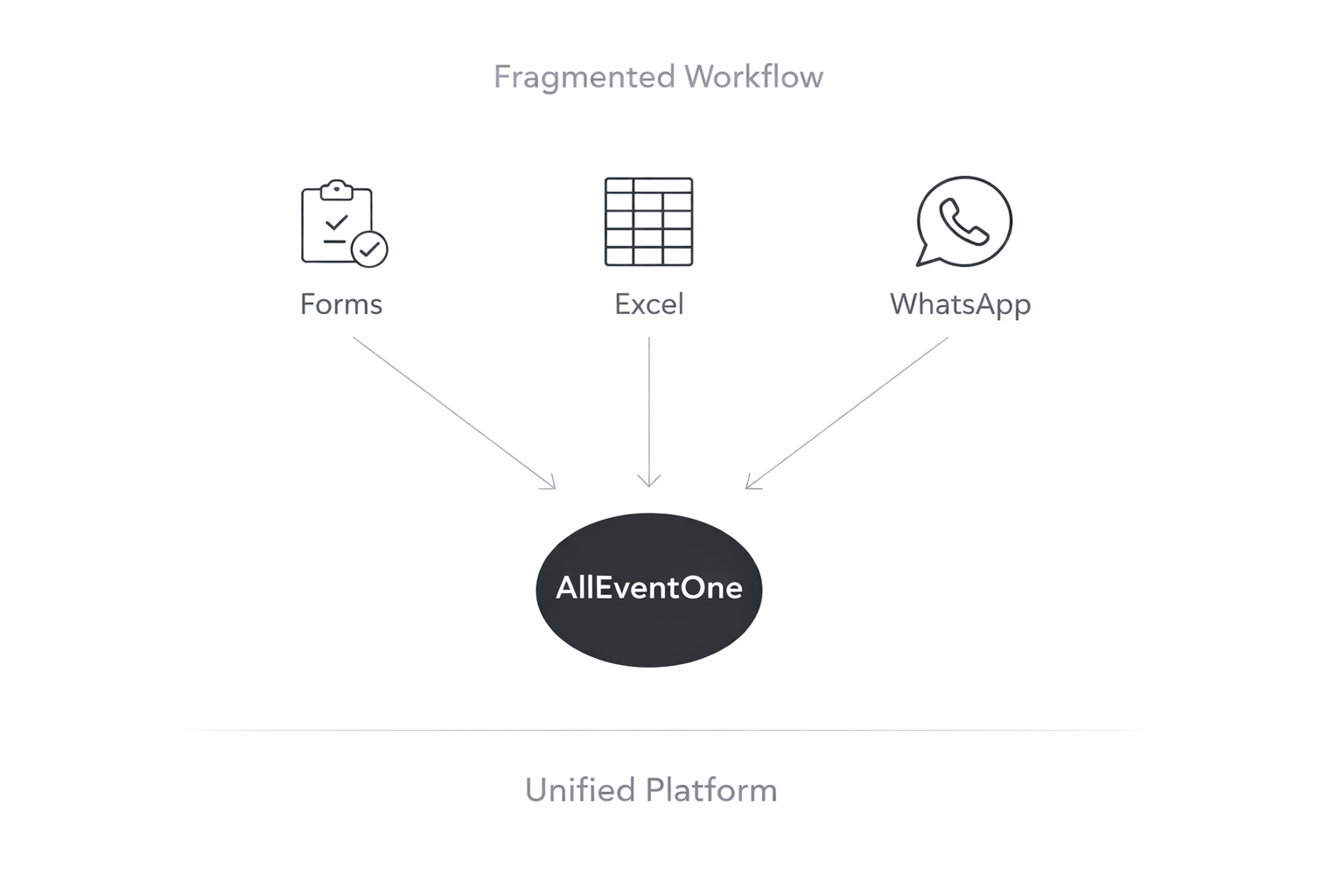
Event planners rely on multiple tools to manage registration, attendance, and feedback. This fragmented workflow leads to inefficiencies, manual cross-referencing, and increased operational overhead.
As events scale, check-in processes become chaotic, requiring additional staff and creating delays for attendees. Planners struggle to maintain organization while ensuring a smooth experience.
The Goal
The goal was to design a centralized platform that simplifies event operations from registration to post-event feedback while reducing the need for manual coordination and additional staffing.
Research & Insights
Research revealed that event planning is both rewarding and highly stressful, requiring extensive coordination, time management, and participant engagement.
Key insights:
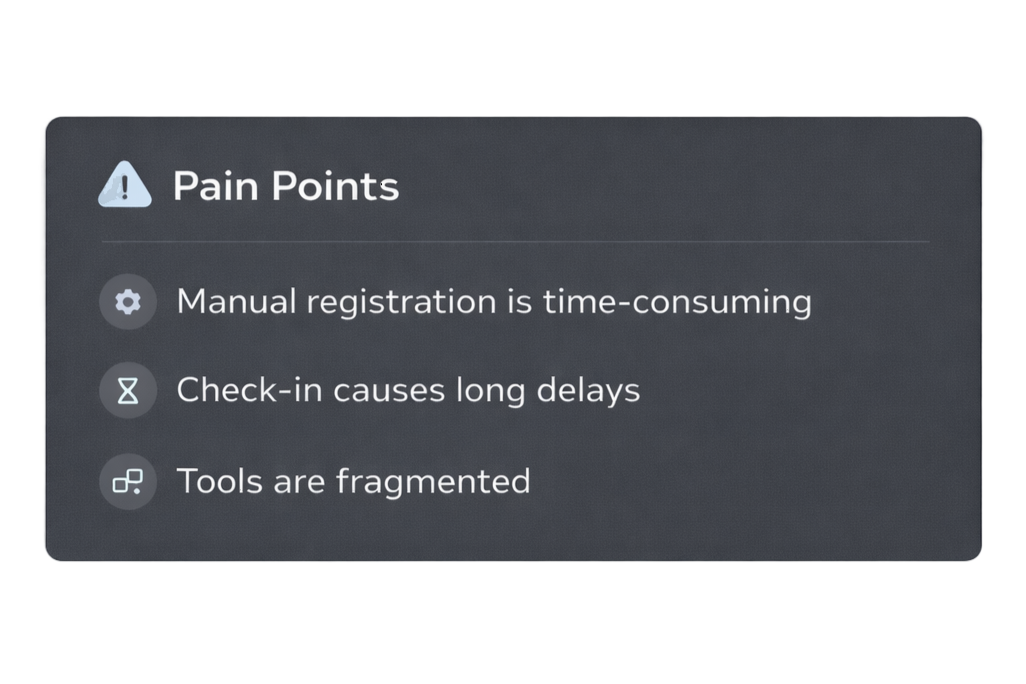
Planners rely heavily on multiple tools (Google Forms, spreadsheets, social platforms)
Registration and sign-in processes are often tedious and time-consuming
Coordinating attendees and staff becomes overwhelming at scale
Efficient communication and real-time updates are critical to success
User Scenario
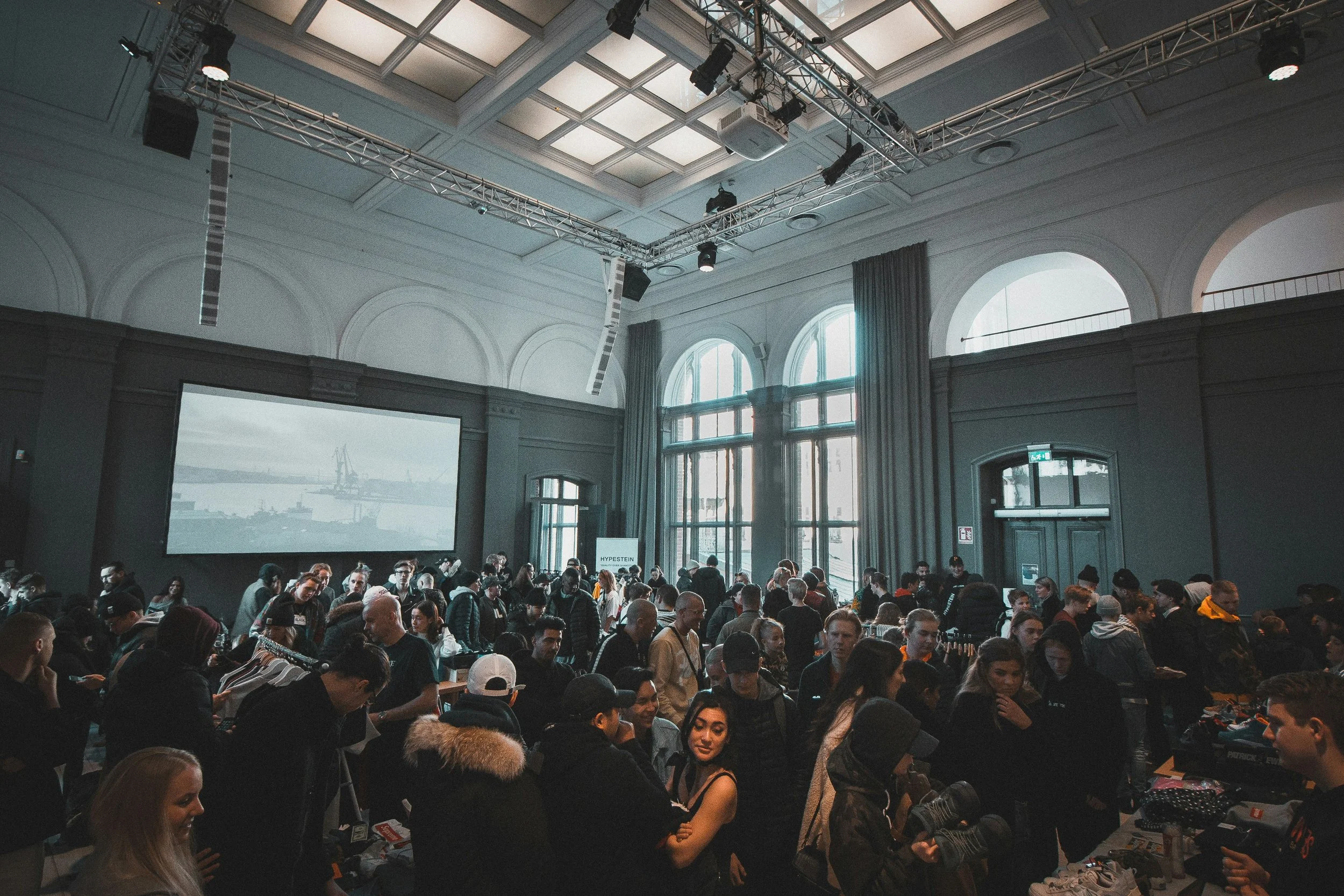
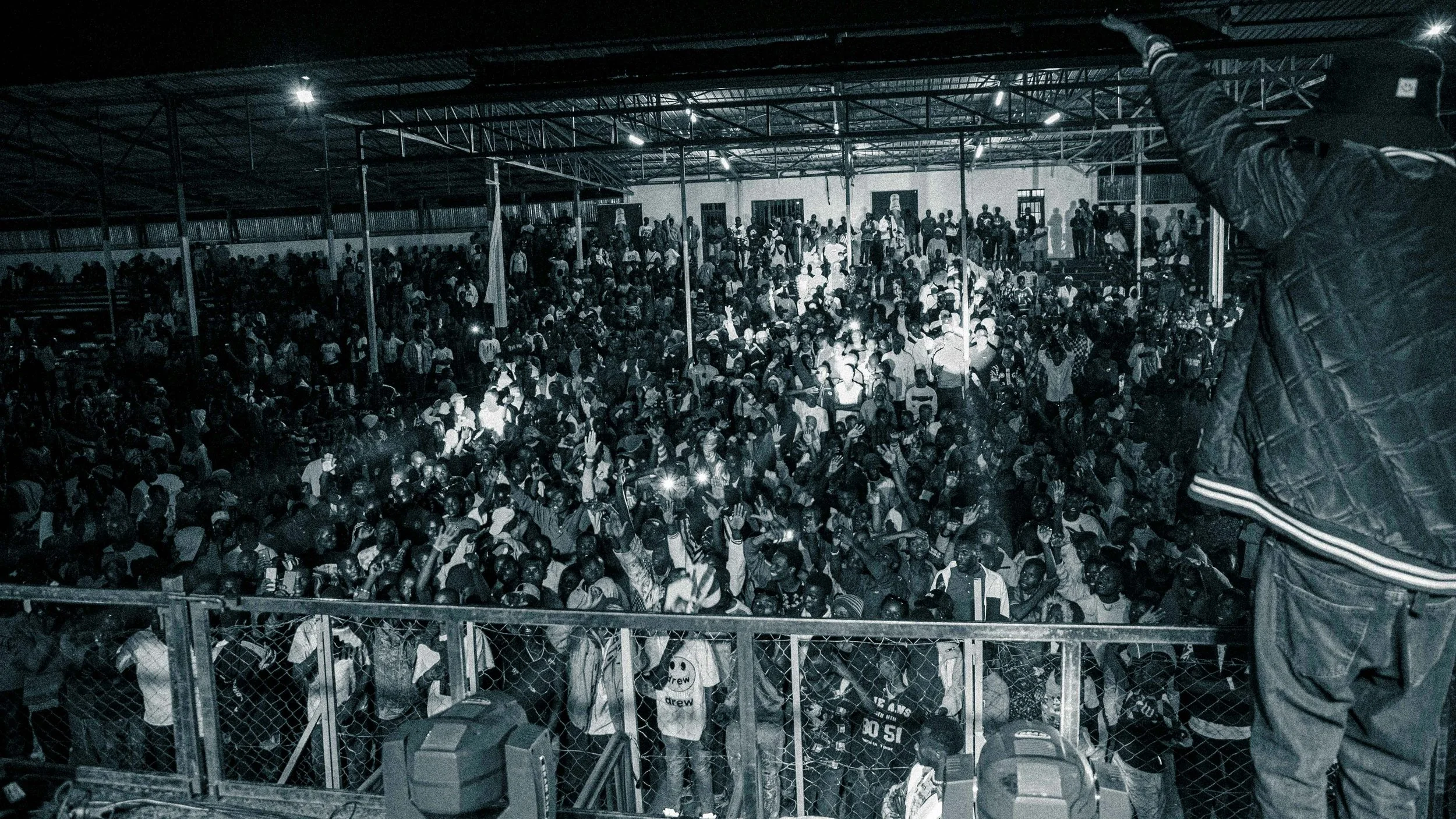
Julez, a community event planner, organizes a large basketball tournament with over 700 attendees.
Despite careful planning, the check-in process becomes overwhelming as attendees arrive all at once. Long lines form, staff become stressed, and delays impact the overall experience.
This highlights the need for a system that can handle scale, reduce friction, and streamline operations in real time.
The Solution
AllEventOne is a mobile platform designed to centralize event operations and reduce friction across the entire event lifecycle.
Core Features:
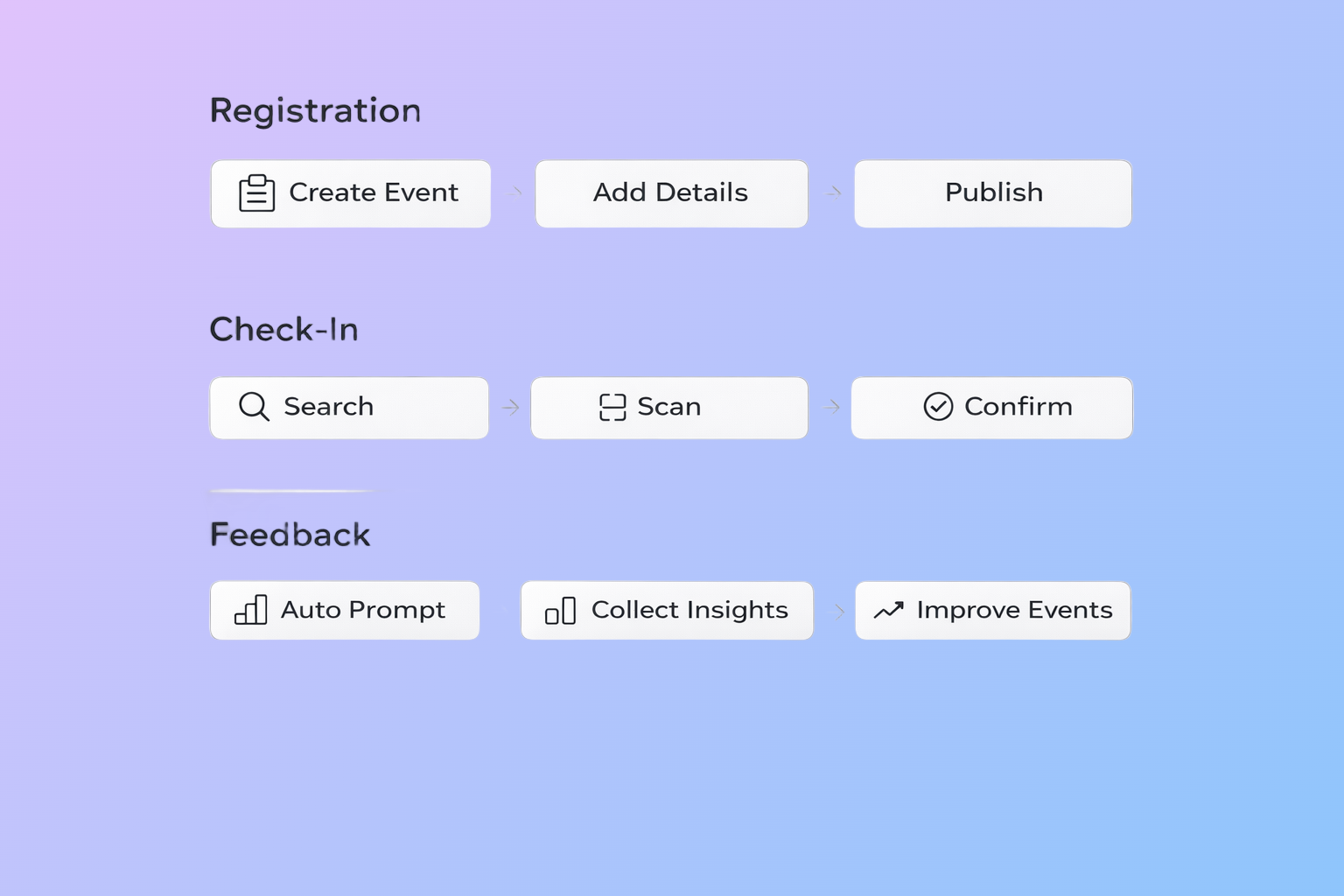
Seamless registration and attendee tracking
Fast sign-in process (search or scan-based)
Automated post-event feedback collection
Integrated communication and outreach tools
Event scheduling and reminders
Design Process
The design process focused on simplifying complex workflows into intuitive user flows.
Steps:
Concept exploration and problem framing
Wireframing core flows (registration, sign-in, outreach)
Iterating on usability and efficiency
Structuring a system that reduces manual effort
Research → Wireframes → Prototype → Testing → Iteration
Wireframes
Early wireframes exploring key flows including event creation, attendee management, outreach, and real-time sign-in.
To get a closer look at the early wireframe, please click the image.
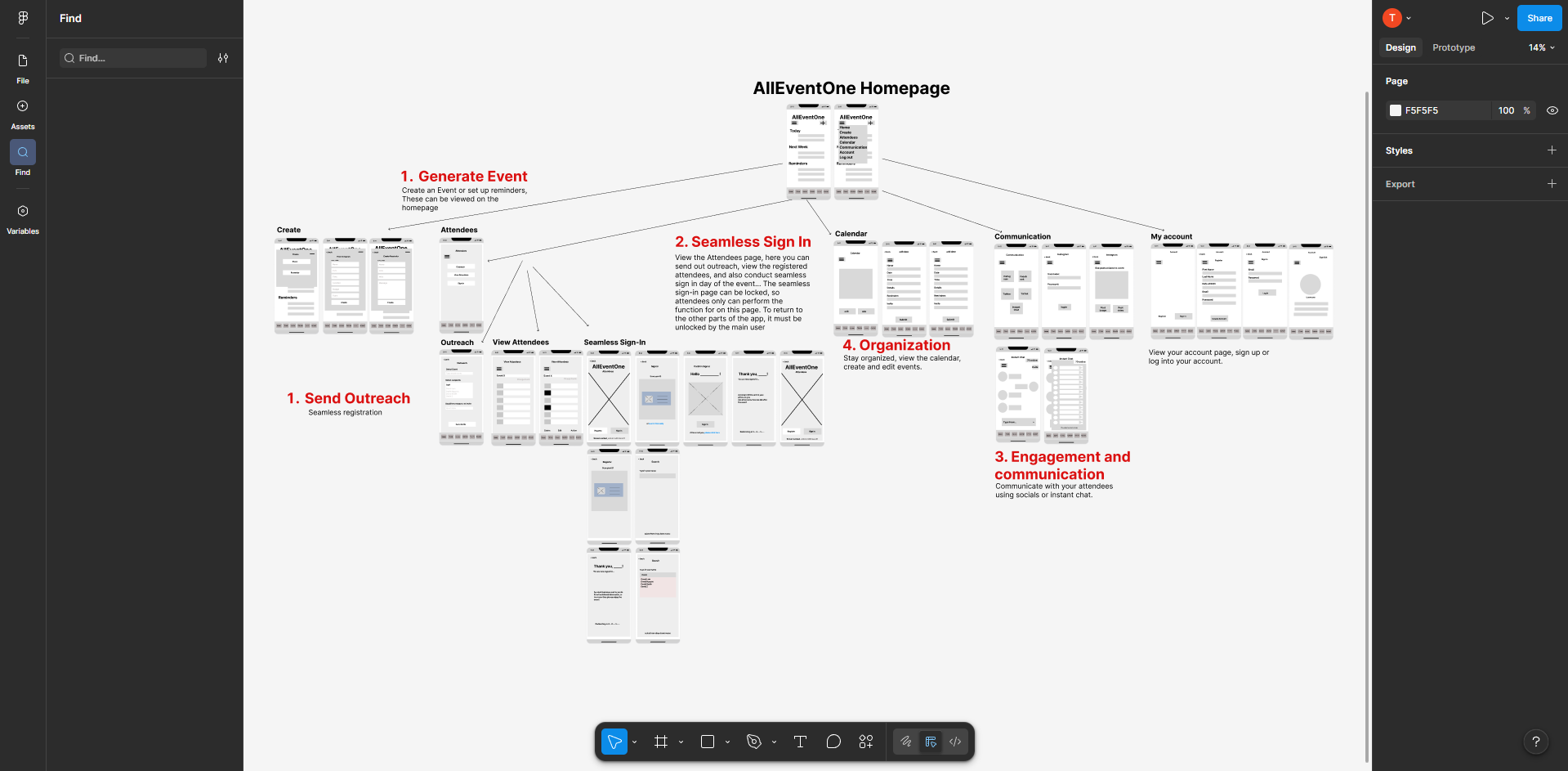
Early exploration of core user flows and system structure
Key flows
Reflections
This project highlighted the importance of designing systems that reduce operational complexity rather than just improving visual interfaces.
By focusing on efficiency, scalability, and user flow, the platform demonstrates how thoughtful UX design can significantly improve real-world processes.